Look After Yourself in Autumn: What Does Our Body Need as the Season Changes?
The days are getting shorter, the air is cooling, the rains are starting. Perhaps autumn is asking us to change not only our wardrobe, but a little of the way we look after ourselves too.
I love autumn. After the rush of summer it feels to me like a time to come home a little, to slow down, to draw closer to books, hot coffee and long meals around the table. For our bodies, autumn is a season of transition.
We start waking up in the dark. The time we spend in daylight shrinks. It gets easier to put off the walks we took without thinking in summer, telling ourselves “it's raining”. The windows close and we spend more time indoors. Respiratory infections come back into our lives.
In the face of all this, we do not need some miracle supplement made for autumn.
But we may need to rearrange our routines a little to suit the season.
Let Us Not Lose the Light
One of the first things to change in autumn is daylight.
Daylight does not only let us see what is around us. It is one of the most important regulators of the biological clock in our brain, our circadian rhythm.
Meeting natural light, especially in the morning, helps regulate our sleep and wake cycle. The timing of melatonin release in the evening is part of the same system.
So let us not spend our mornings entirely indoors just because the weather has turned cool.
If opening the curtains is not enough, let us go outside. Even a cloudy morning is quite different from the inside of our home in terms of natural light. We can sometimes drink our coffee outdoors. We can take a short morning walk.
If it is not raining, we can step out for fifteen or twenty minutes at lunchtime. Some of you may, like me, enjoy walking in light rain; then we can take a short walk under an umbrella, rain and all.
In autumn, perhaps one of the first routines we should protect is our contact with daylight.
Do Not Let the Rain Be a Reason Not to Move
Moving is easier in summer.
We swim in the sea, we walk, we travel, we spend more time outside.
Then the rains begin.
And one day we notice our daily steps have dropped.
Yet our muscles have no season.
When we talked about muscle and protein in recent pieces, we kept arriving at the same place: if we want to stay independent in the future, we need to keep using our muscles today.
So let us have a small plan B for autumn.
If we cannot walk outside, a short strength session at home.
The stairs instead of the lift.
Swimming.
Pilates.
The gym.
Or walking in the rain in a raincoat and good shoes.
I especially love that last one.
Because sometimes looking after ourselves is not about making life sterile, but as simple as going out into life dressed for it.
Let Us Remember the Vitamin D Question
As the sunlight fades, vitamin D comes back onto the agenda.
How much vitamin D we need can vary from person to person. Many factors play a part, such as sun exposure, age, diet, skin characteristics and existing health. So it is better, especially for people at risk, for vitamin D status to be assessed together with a physician and supplemented at a suitable dose if it is needed.
The approach I like with supplements applies here too:
First, let us see whether we really need it.
When We Think of Immunity, Let Us Not Think Only of Vitamin C
With autumn, the number of products that “boost immunity” starts to rise too.
Yet the immune system is not a switch that one vitamin turns on and off.
Enough protein, a varied diet rich in vegetables and fruit, enough sleep, regular movement and getting the necessary vaccines on time are all parts of the bigger picture that supports our immune system.
The protein we talked about in the last piece comes up here again, because many parts of the immune system, antibodies included, are made of protein.
We can bring a little more colour to the autumn plate too.
Squash, broccoli, cauliflower, leeks, apples, pears, pomegranates...
Making the most of the variety the season offers may be a better place to start than asking “what should I take for my immunity?”
Let Us Not Forget Our Gut
There is a close relationship between the immune system and the gut microbiota.
Here too, instead of looking for the answer in a single “miracle probiotic” capsule, we can look at what is on our table.
Foods with live cultures such as yoghurt and kefir, pickles, fermented turnip juice (şalgam), vegetables, fruit, pulses, and fibre sources varied with nuts and seeds can all be part of a richer way of eating for our gut.
We can carry the little 3 + 3 rule we used in the protein piece into autumn as well:
Three portions of live-culture or probiotic food through the day, and at least three fibre-rich portions.
This is not the name of a scientific guideline. It is a small Authentic Longevity rule of ours that makes our daily table easier to remember.
Let Us Reset Our Sleep
Perhaps one of the loveliest things about autumn is that it gives us a chance to come home a little earlier.
We can use that for sleep.
Sleep is not only needed to feel fresh the next day. It is closely tied to metabolic health, immune function, cognitive performance and mood.
As the days shorten, we can listen a little more to our body's rhythm.
Light in the morning.
Movement through the day.
Less bright light and fewer screens as the evening goes on.
And regular sleep times, as far as we can.
Sometimes the most powerful tools of longevity are not the newest ones, but the ones we have known for years and still find hard to practise.
Autumn Also Means Turning Inward a Little
When I say “Care Deeply”, I do not only mean our bodies.
After the outward energy of summer, autumn has a different invitation.
A little towards home.
A little towards ourselves.
Perhaps to the book we have wanted to read for a long time.
Perhaps to a coffee with a friend.
Perhaps to a soup cooking in the kitchen.
Perhaps to watching the rain and doing nothing at all.
Ageing well should not mean always doing more.
Sometimes ageing well means noticing the rhythm of our body and mind, and moving with it.
The seasons remind us of this.
Autumn is here.
It will rain.
The days will shorten.
Life will move a little further indoors.
But we will keep moving, eating well, sleeping, getting out into daylight, seeing the people we love, and staying curious.
Because looking after ourselves has its seasons too.
This piece is written to give general health information. Personal illnesses, the medication you take, nutritional needs, supplements and vaccines all call for an individual medical assessment.
Sources and Further Reading
National Institute of General Medical Sciences.
Circadian Rhythms.
Core scientific information on circadian rhythms, the light and dark cycle, and the body's biological clock.
Khalsa, Sat Bir, et al., 2003.
A Phase Response Curve to Single Bright Light Pulses in Human Subjects. The Journal of Physiology, 549, 945-952.
One of the foundational studies on how light affects the timing of the human circadian clock.
World Health Organization.
Physical Activity.
Recommendations on regular aerobic activity, muscle-strengthening exercise and cutting down sedentary time, for adults and older adults.
European Food Safety Authority, 2016.
Dietary Reference Values for Vitamin D. EFSA Journal, 14(10), 4547.
A scientific assessment of vitamin D requirements and of how much sun exposure varies.
Rinninella, Emanuele, et al., 2019.
What is the Healthy Gut Microbiota Composition? A Changing Ecosystem across Age, Environment, Diet, and Diseases. Microorganisms, 7(1), 14.
A comprehensive review of how diet, age and environment relate to the gut microbiota.
Centers for Disease Control and Prevention.
About Sleep.
Current public health information on why enough regular sleep matters for overall health.
Related reading
Authenticity
Masal, Where Are You?
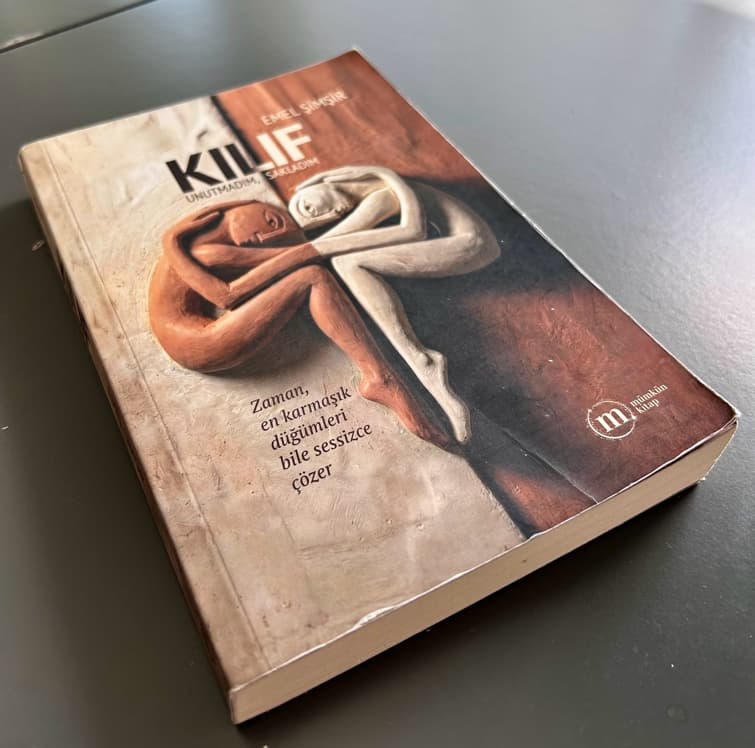
In Emel Şimşir’s novel Kılıf, one question comes up again and again: “Masal, where are you?” As we read on, the question turns back to us: Where am I?
October 1, 2026
Health
How Much Does Protein Matter for Ageing Well?
Protein is one of the shared needs of our muscles, our immune system, and even our ability to heal.
September 30, 2026
Health
Why Muscle Strength Is the Foundation of Ageing Well
Being able to walk, to climb stairs, to carry your own suitcase. Ageing well is usually this ordinary. On why muscle mass starts to fall from our thirties, what muscle memory actually means, and how to scatter movement through an ordinary day.
August 28, 2026